M_003 — CASE STUDY
HALCYON DRIFT
Generative sound-reactive installation
OVERVIEW
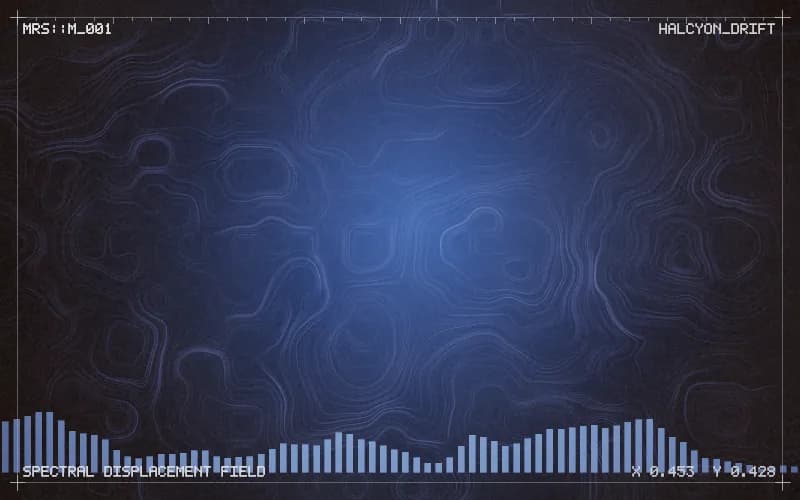
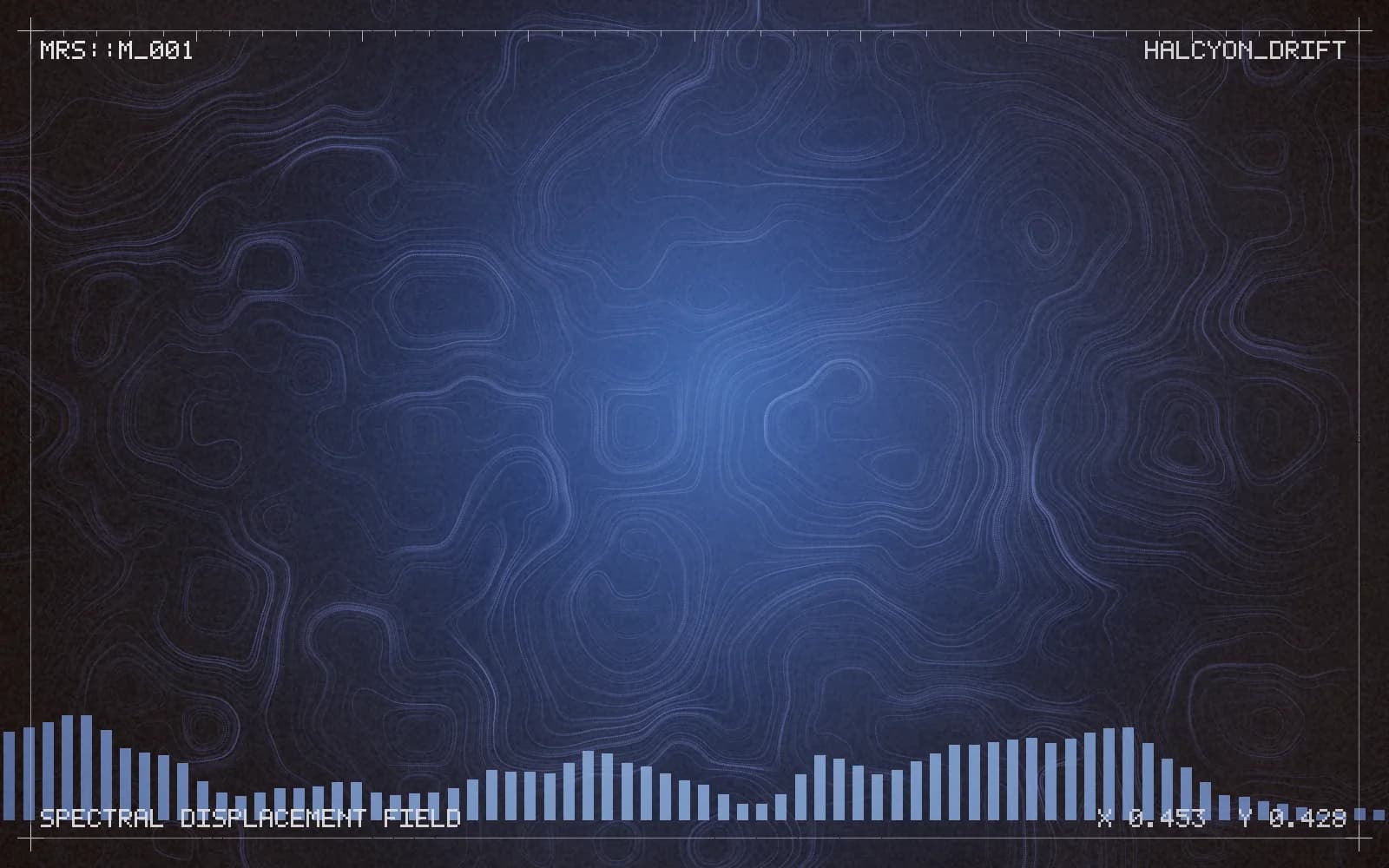
Halcyon Drift is a permanent installation in the Institute atrium. Eight microphones sample the space continuously; a particle field of 1.2 million points is displaced by the resulting spectral energy. The piece never repeats — its state is a function of the room it lives in, and the room is never the same twice.
- CLIENT
- Halcyon Institute
- YEAR
- 2026
- ROLE
- Creative DirectionCreative DevelopmentSound Design
- TECH STACK
- Three.jsGPGPUAudioWorkletWebGL2TouchDesigner
MEASURED IMPACT
Particles
1.2M
Latency
27ms
Uptime
99.4%
Surface
14m
SYSTEM ARCHITECTURE & DESIGN
The field
Positions and velocities live in two floating-point textures and are advanced entirely on the GPU. A curl-noise field provides the base flow; audio bands in the 80–4000Hz range inject vorticity at nine anchor points mapped to the physical microphone array.
Latency
Perceptual sync required end-to-end latency below 40ms. We moved FFT analysis into an AudioWorklet, pushed band energy into a ring buffer read once per frame, and cut the render path to a single pass. Measured end-to-end: 27ms.
Calibration
The projection surface is a compound curve. We built a browser-based calibration tool that warps the render target against 96 measured control points, so the piece could be re-aligned by the venue team in under ten minutes without us on site.
VISUAL GALLERY